Essential Ball Control Drills for Skill Development
Master fundamental techniques that elevate your first touch, enhance dribbling precision, and develop the technical foundation required for competitive football performance. Learn structured exercises designed to build consistency and confidence on the ball.
Understanding Ball Control Fundamentals
Ball control represents the foundation of technical excellence in football. It encompasses the ability to receive, manage, and manipulate the ball with precision and efficiency under varying match conditions. Players who develop superior ball control gain significant advantages in match situations, including improved decision-making time, better positioning options, and enhanced capacity to execute tactical objectives.
Effective ball control combines three essential components: touch quality, spatial awareness, and technical consistency. Touch quality refers to the surface area contact with the ball and body positioning that allows optimal ball reception. Spatial awareness involves understanding positioning relative to opponents and available passing lanes. Technical consistency ensures reliable performance across different game scenarios and pressure situations.
- Develops improved first touch capabilities
- Enhances decision-making during play
- Builds confidence in possession scenarios
- Supports effective dribbling and ball manipulation
- Strengthens technical foundation for advanced skills
Essential Ball Control Drills
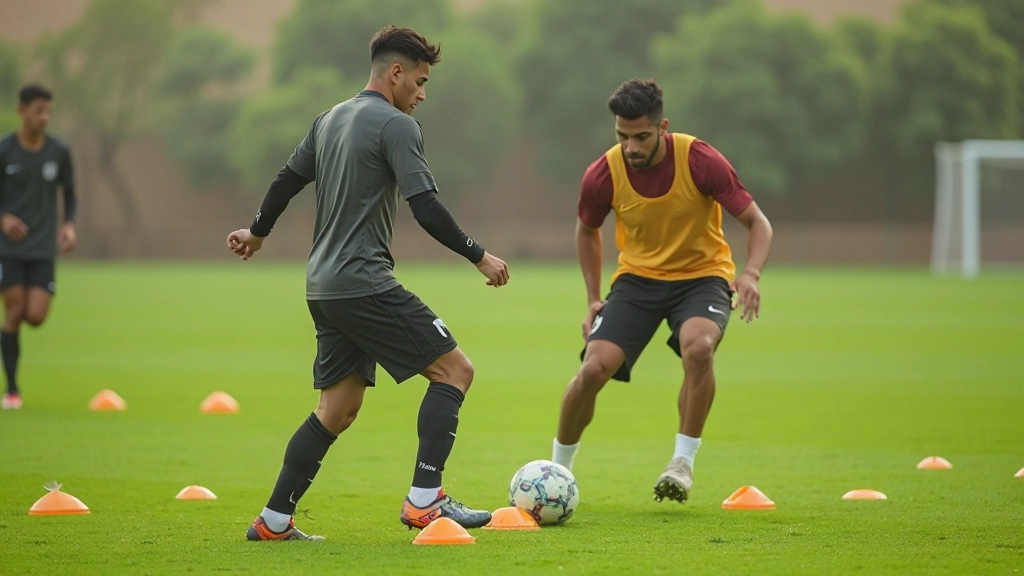
Structured training drills provide systematic approaches to developing ball control capabilities. These exercises progress from foundational techniques to more complex scenarios requiring integration with movement patterns and decision-making. Regular practice with appropriate drill selection supports continuous technical improvement and skill consolidation.
Wall Pass and Control
Execute passes against a wall from varying distances and angles. Focus on controlling the returning ball with different surfaces (sole, inside, outside of foot). This drill develops touch quality and teaches ball control from unexpected angles and speeds. Progress by increasing pace and reducing preparation time before control.
Cone Weaving Patterns
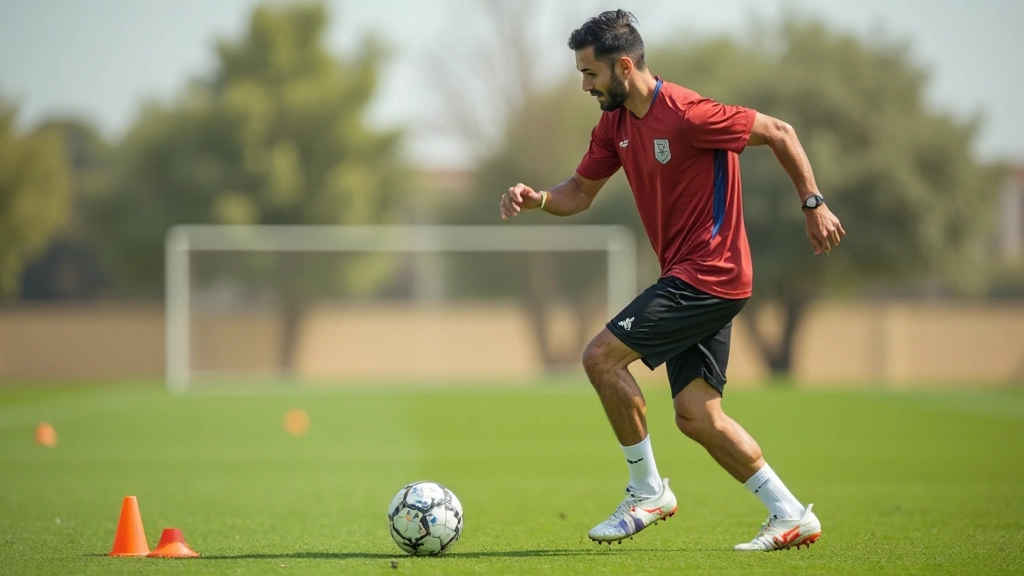
Navigate cones arranged in linear or curved patterns while maintaining close ball contact. Emphasize smooth transitions, body positioning, and consistent touch throughout the sequence. Vary cone spacing and movement patterns to challenge different technical aspects. This develops dribbling control combined with directional changes.
First Touch Reception Drills
Receive passes from various angles and heights, focusing on immediate ball control and positioning. Vary pass speed and accuracy to simulate match conditions. Progress to receiving while under pressure or with limited preparation space. This directly addresses game-realistic scenarios requiring immediate technical execution.
One-Touch Control Progression
Perform single-touch controls before immediate passes or shots. This develops technical efficiency and quick decision-making. Practice with different foot surfaces and body positions. Progress to executing this under time pressure or with movement requirements integrated into the drill sequence.
Educational Information Notice
This content provides educational information regarding ball control techniques and training approaches in football. It represents general information about training methodologies and skill development concepts. Individual results from training vary based on numerous factors including starting ability level, training frequency, coaching quality, and personal dedication. This information does not constitute professional coaching advice or personalized training guidance. Consult qualified coaching professionals for customized training programs suited to individual circumstances and objectives.
Advanced Practice Methods and Development Strategies
As ball control capabilities develop, progressive training approaches support continued improvement. Integrating ball control with game-realistic scenarios, decision-making requirements, and competitive pressure elements creates training environments more closely matching match demands. This approach supports skill transfer to actual competitive situations.
Incorporating game-realistic conditions means practicing with pressure from defenders, limited space, and time constraints. Progressive complexity involves combining ball control with tactical elements such as positioning, awareness of available options, and appropriate decision-making timing. These integrated approaches develop technical skills within the context of actual game requirements.
Summary and Key Takeaways
Ball control development through structured drilling supports technical excellence and competitive performance in football. Implementing systematic practice approaches that progress from foundational techniques to game-realistic scenarios creates comprehensive skill development. Consistent engagement with appropriate drills, combined with focus on execution quality and progressive complexity, establishes the technical foundation required for advanced football performance and tactical effectiveness on the pitch.
Related Articles